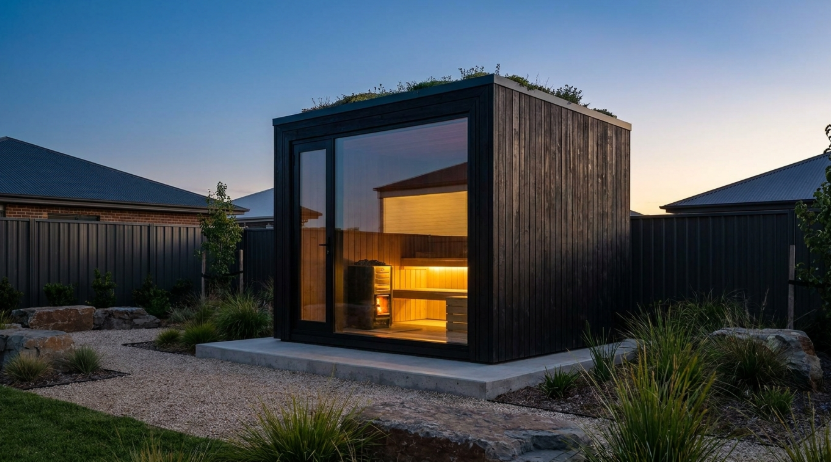
What to Put a Cabin Sauna On: Pads, Decks, and Gravel
A cabin sauna needs a level, well-drained base, and the main options run from a compacted gravel pad at $200 to $700, to pavers over gravel in the $600 to $1,500 range, to a poured concrete pad at $1,000 to $3,000, or an existing deck if its structure can carry the added weight. Gravel is cheapest and drains well but shifts slightly over years. Concrete is the most permanent and lowest-maintenance option but costs the most upfront. Here is how each option actually compares once you factor in cost, drainage, and long-term durability.
Why Does the Base Matter So Much for a Cabin Build?
A cabin sauna sits on wood floor sills that touch the ground directly or through a shallow foundation, unlike a house with a deep footing below the frost line. Standing water or poor drainage under the cabin pushes moisture up into those sills over time, which can lead to rot, warping, or mold years before it would otherwise be a concern. A level base also matters for the door to hang and seal correctly. Even a small amount of settling on one side can leave a gap that lets heat escape and rain in, undermining both comfort and the kiln-dried wood’s resistance to moisture damage.
Gravel Pad: What It Costs and How It Performs
A compacted gravel pad is the most common budget choice, typically running $200 to $700 in materials and labor for a small to mid-size cabin footprint, depending on whether you hire it out or do it yourself. The process involves excavating a few inches of topsoil, laying a geotextile fabric to stop weed growth and soil mixing, then compacting several inches of crushed stone in layers. Gravel drains extremely well, which is its biggest advantage, but it can shift slightly over a few years of freeze-thaw cycles in colder climates, occasionally requiring a bit of releveling. For most owners in a moderate climate, gravel is a reasonable long-term base rather than a temporary fix.
Concrete Pad: What It Costs and How It Performs
A poured concrete pad is the most permanent option, typically running $1,000 to $3,000 depending on size, region, and whether you hire a contractor or handle forming and pouring yourself. Concrete offers a perfectly level, stable surface that essentially never shifts once cured, and it sheds water efficiently if poured with a slight slope away from the cabin. The tradeoff is upfront cost and the fact that concrete is effectively permanent. If you later want to relocate the cabin, you are left with a slab to deal with rather than gravel you can simply rake flat elsewhere.
Building on an Existing Deck: What to Check First
Placing a cabin directly on an existing deck avoids new foundation costs entirely, but it is not automatically safe. A mid-size cabin with a few occupants, benches, and a stove can weigh several hundred to over a thousand pounds more than the deck furniture the structure was originally designed to hold. Before placing a cabin on a deck, check the joist spacing, footing depth, and overall condition with a contractor or structural professional, especially on an older deck. Reinforcing joists or adding footings can cost $500 to $2,000, which sometimes makes a new gravel or paver pad the more economical choice anyway.
Paver Base: A Middle Ground Worth Considering
Pavers set over a compacted gravel base sit between gravel and concrete on both cost and permanence, typically $600 to $1,500 depending on paver material and footprint size. They drain well like gravel alone but present a flatter, more finished surface underfoot around the cabin entrance. If a single paver settles unevenly after a few seasons, it can be lifted and releveled individually rather than requiring you to redo an entire slab, which is a real advantage over concrete for anyone in a climate with significant ground movement.
Does a Solid Base Actually Affect How Often You Use It?
A stable, well-drained base indirectly supports consistent use, since a cabin with a sticking door or a damp, musty smell from trapped moisture underneath is one people stop using regularly. That matters because the evidence on sauna bathing points toward frequency being part of the benefit. A Mayo Clinic Proceedings review found regular, consistent sauna use associated with a broader range of favorable cardiovascular and general health outcomes than occasional use, and a systematic review in Evidence-Based Complementary and Alternative Medicine reported similar patterns across smaller clinical studies. These are association findings rather than proof that the base itself changes health outcomes, but a cabin that stays comfortable and dry underfoot is simply one you are more likely to keep using year after year. Anyone finalizing a footprint and base plan before ordering a cabin can check current model dimensions at SweatDecks to size the pad correctly before pouring or laying gravel.
Does Regional Climate Change Which Base Makes Sense?
In areas with heavy freeze-thaw cycles, gravel and pavers tend to handle ground movement better than a single rigid concrete slab, which can develop hairline cracks over many winters as the soil beneath it heaves slightly. In hot, dry climates with stable soil, concrete’s advantages hold up longer with less risk of that kind of seasonal shifting. Coastal or high-rainfall regions benefit most from whichever base drains fastest, since standing water under the cabin is the single biggest driver of premature sill rot regardless of which material you choose. Checking how your specific yard handles heavy rain before committing to a base, rather than assuming your neighbor’s choice will work the same way on different soil, is worth the extra week of observation.
Which Base Should You Actually Choose?
For a tight budget and good natural drainage on your property, gravel is hard to beat on cost. For a permanent installation you never plan to move, concrete offers the least long-term maintenance. If you already have a solid, appropriately rated deck, building there saves the most money overall, provided a structural check confirms it can carry the load. Pavers are worth considering if you want a more finished look than gravel without committing to a full concrete pour.
Frequently Asked Questions
What is the cheapest base for a cabin sauna?
A compacted gravel pad, typically $200 to $700 for a small footprint, though it needs occasional releveling over time.
Can you put a cabin sauna directly on an existing deck?
Yes, if the joists and footings are rated for the added weight. A structural check is worth doing before placing it there.
Is a concrete pad worth the extra cost over gravel?
For a permanent installation, usually yes. It drains predictably and needs almost no upkeep despite the higher $1,000 to $3,000 upfront cost.
Do pavers work as well as poured concrete under a cabin sauna?
Pavers over gravel perform similarly for drainage and stability, at a moderate cost, and individual pavers can be releveled if needed.
Does the base affect how long a cabin sauna lasts?
Yes, poor drainage can trap moisture against the floor sills and lead to wood rot years earlier than a well-drained base would allow.
References
- “Cardiovascular and Other Health Benefits of Sauna Bathing: A Review of the Evidence.” Mayo Clinic Proceedings, 2018. https://pubmed.ncbi.nlm.nih.gov/30077204/
- “Clinical Effects of Regular Dry Sauna Bathing: A Systematic Review.” Evidence-Based Complementary and Alternative Medicine, 2018. https://pubmed.ncbi.nlm.nih.gov/29849692/
- “Benefits and risks of sauna bathing.” The American Journal of Medicine, 2001. https://pubmed.ncbi.nlm.nih.gov/11165553/
By Callum Vance